The Making of Common Sense
What makes expert judgment seem like common sense, and how can Tactical Decision Games help people develop that same ability to recognize, interpret, and respond to complex situations?
In 2001, James M. Kilts was brought on as CEO of Gillette to turn the company around. When he took the job, he was hounded with all kinds of advice. As Kilts (and the case study) recounts,
“One of the first phone calls I received when news broke about my becoming Gillette’s new CEO was from a Boston-based business associate. “Jim, I know a lot of Gillette executives, and my advice is go slow.” Gillette people don’t like outsiders, he said, which is why the company last had an outside CEO seventy years ago, and he failed miserably. “Give people time to get to know you before you start changing things,” my friend said. “It’s the best approach you can take.”
(…) [Everyone who called] had a plan or recommendation that should receive my top priority if I wanted to succeed at Gillette.
With all that advice, how do you decide what matters? One of the biggest impediments to success in business — for individuals and companies — is the failure to achieve that understanding.”
So how do you achieve that understanding? If you have read the case study, you know what Kilts did – a technique he calls the ‘fast track quick screen elimination process’. But even having read it, do you think you could do it? If you were put in the hotseat, would you be prepared to decide which divisions to divest, which to fix, and which to milk till its early grave? Would you have known where to look? And even if you did know where, would you understand the implications of what you see, know what to do about it, and have the confidence to act?
This is what Tactical Decision Games (TDG) offer. An ability to know how to quickly scan a problem, and then act decisively.
TDG’s are not anything revolutionary. In their modern form, they were invented by John Schmitt of the USMC in order to teach tactical doctrine in the wake of the failures of the Vietnam War. The idea is to get a few soldiers around a map which presents a tactical situation, and then a more experienced facilitator pushes on them, and gets the participants to also push on each other, until they are able to generate a viable solution. TDGs were developed as a way to gain experience off the battlefield when you cannot afford the decades of war experience required to become a true master of the craft.
This is very simple stuff! I am sure even our earliest ancestors occasionally gathered around a fire, and Brŭg the caveman would say to his son, “Brŭg hungry. Brŭg in axe valley by the broke tree. You know? Good. Brŭg see deer. Brŭg have bow and arrow. You Brŭg. What do?”
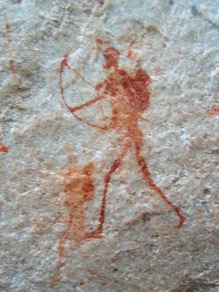
But you are presumably reading this because you care about business expertise, not war or paleolithic hunting. Can the TDG be adapted in order to develop business expertise? What would a business TDG even look like? And would they be effective enough to help you, like Kilts, turn around a $35 billion dollar company?
In an upcoming two-part TDG Design Workshop, John Schmitt, who introduced TDGs to the U.S. Marine Corps, will help professionals interested in applying this approach to business and other domains. Together, we’ll explore how to design compelling scenarios that help people develop expertise and better judgment.
To understand why we are confident that business TDGs can accelerate expertise, we first need to understand the nature of expertise.
Cannot not see it
Expertise is often seen as something unobtainable to the ordinary folk. As if only some elite .001% of the population deserve the label. I think this is the wrong way to think about expertise. Expertise is not some exceptional skill only a few can develop, but is instead the natural development of human capacity.
In my line of work, we often hear stories of amazing feats of expertise. The experienced operator who walks into a room and immediately sees the problem. The military genius who has that Coup d’œil which allows them to see how to thread the needle through all the complexity, and win the battle. The Chess master who catches a glimpse of the board, and instantly sees the winning move.
And then there is this picture.
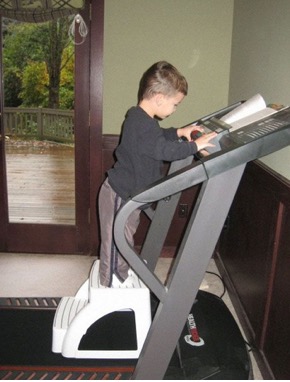
But yet, you didn’t stay that way. You might even now feel like it is impossible to not understand instantly. Like it is the most trivial common sense thing in the world for anyone with the barest experience with physics and treadmills to understand why it is a bad idea. And you would be right to say this.
But note the importance of experience! No one is born understanding the physics of treadmills, because common sense is not something we are born with. Rather common sense develops to the degree that we make sense of the world. And with that sensemaking comes not some unique skill (or atleast, I don’t consider the kid in the picture to be lacking a “skill”), but the ability to look at a situation and instantly size it up. To just understand with a quick scan what is happening.
This is why I describe expertise as an uncommon sense. The difference between common sense and expertise is not a difference in kind, but a difference in vantage point. From the perspective of years of experience and sensemaking, any mistake seems like a lack of common sense, whereas the perspective from below sees miraculous feats they can’t quite make sense of, and they call it expertise. But it is the same continuum regardless of where you are standing.
Expertise is the natural development of human capacity. An uncommon common sense that fools people into believing there is something exceptional happening that goes beyond what ordinary folk are capable of. It is when you have made sense of the various factors so well that it feels like anyone who cannot see it is missing common sense.
Learning common sense
The thing about falling is that it is a very quick feedback loop. If you step wrong on a treadmill, you will get instant feedback telling you that you have made a mistake. This is not so good for the stress levels of parents, but a very good forcing function for developing common sense. The “school of hard knocks” can be very effective when the knocks come quick enough.
But not every domain in life has great feedback loops. In many domains, the feedback loop is hidden, or just too slow for developing expertise in any reasonable time period. This can lead to lots of knocks without a lot of learning. In other domains, such as the ones ShadowBox typically works in, the knocks are too strong to be tolerated. You only get to fail in battle so many times before your luck runs out.
The school of hard knocks can be a very effective teacher, but it can also be cruel and inconsistent. There has to be another way to learn besides real life feedback loops.
I think we can start to get a glimpse of this alternative way to learn by returning to the picture above.

The treadmill is unplugged. Why? Because the parents know that not every lesson has to be taught by falling down.
Yes, learning comes best from experience, but it doesn’t always have to be your own personal real-life experience. Sometimes you can learn by absorbing the expertise of those around you through advice, coaching, and careful observation of others.
Condense all of that into a single package, and what do you get? Well, a TDG.
TDGs are a condensed and accelerated osmosis of expertise in which a group of people collectively make sense of tough situations, under the tutelage of an expert facilitator, until they are able to make sense of a scenario. It is a process in which, in real time, you can see a complicated scenario turn into common sense before your eyes.
At the beginning of a TDG you are the child on the treadmill, unable to understand the danger beneath your feet. At the end, you are wondering how you could have been so blind to so many obvious considerations. This happens not through lecture, but by seeing how the principles of your domain play out in a realistic situation. The facilitator asks you questions which forces you to see what you were blind to. Other participants share their tactics, and you understand an implication you would have missed.
That is how TDGs develop expertise. Not by teaching you some arcane skill reserved for those elite .001% with decades of experience and a natural talent the rest of us lack. But instead by teaching you through osmosis to make sense of uncommon situations until they become common sense. You do this over and over again until you start to understand, unprompted, how to quickly scan a problem, understand the implications, and then act on it confidently.
The remaining question for me is not whether expertise is obtainable. I have confidence that anyone reading this blog can accelerate the acquisition of expertise through effectively designed TDGs. The question is one of creativity and design. And that is what we plan to help with in the upcoming workshop.
This workshop was developed in partnership with Cedric Chin of Commoncog and initially offered to the Commoncog community. With a limited number of seats still available, we’re now opening registration to the broader Naturalistic Decision Making community.
If You’d Like to Learn How to Develop Your Own TDG
Join ShadowBox and John Schmitt for a live, interactive workshop on designing TDGs for business and other professional settings.
November 17 & 24, 2026 | 7:00–8:30 AM PST | Live on Zoom
Across two 90-minute sessions, participants will explore what makes an effective TDG, how to turn real-world challenges into meaningful scenarios, and how these exercises can be used to develop judgment and share expertise.
Only 9 seats remain. Registration closes on Friday the 13th.
For more on the thinking behind TDGs, explore these articles on my Substack:
The Making of Hindsight — Why expert decision-making depends on recognizing patterns, understanding situations, and knowing what to look for.